Follow on Google News
The credit market brings together economic agents in surplus, i.e. with surplus resources, and agents in deficit, who demand more resources than they have. In general, those who demand resources seek to anticipate consumption in order to increase their well-being or make productive investments with the promise of a future return.
A well-functioning credit market makes these transfers of resources more efficient, less risky and boosts the economy. All of this depends, of course, on how well the market is regulated. One of the premises for the credit market to play its role well is risk management. There is the risk of default, mitigated by credit analysis instruments, and the risk of using this market for illicit purposes, mitigated by governance policies and, increasingly, by technology.
Risk management brings together the financial system's supervisory bodies and market solutions. The decades-long work of credit bureaus is an example of a solution that seeks to control these risks The emergence of databases managed by the first bureaus dates back to the 1950s, when the National Financial System was still in its infancy, banks had limited operations and commercial activity played a fundamental role in financing. It wasn't until the following decade that the Central Bank of Brazil came into being.
Since then, a lot has changed. The bureaus' databases, initially focused on delinquency records, have gained national coverage and have benefited from advances in information technology. In addition to credit analysis, the sector's solutions have incorporated fraud prevention, credit recovery and customer prospecting.
THE SNational Financial System (SFN) has modernized and become more complex. Today, the SFN is home to three types of credit operators: banks, cooperatives and non-banking institutions. Let's start with banks: banking activity is varied and includes commercial banks, development banks, investment banks, as well as Caixa Econômica Federal and the BNDES. Commercial banks have a broader range of activities and are authorized to take demand deposits, which can be requested at any time.
Development banks are institutions controlled by state governments and aim to finance projects with an impact on local social and economic development by taking out term deposits. Investment banks, on the other hand, support companies in more complex operations, such as mergers, acquisitions and going public on the stock exchange, as well as offering long-term financing for companies.
The credit unions offer similar services to banks, including loans and financing. The difference is that this model operates under the associative logic. Data from the Central Bank shows that the Cooperative Credit System represents around 6.5% of the total credit balance and is present in 55% of Brazilian municipalities.
Non-banking institutions, on the other hand, which are still under the SFN umbrella, include institutions which are not allowed to take deposits and which, through other sources of funds, also carry out credit operations. The best known are the Credit, Financing and Investment Companies (SCFI), better known as “financiers”. Development agencies, on the other hand, have a similar function to development banks, aimed at providing fixed and working capital for local businesses.
Although these are the most common options for those looking for credit, there are also possibilities outside the National Financial System. A well-known example in the Brazilian market are merchant development companies - also called “factoring” - which acquire the receivables portfolios of other companies and advance these funds by charging interest.
More recently, new lending models have emerged outside the financial system, such as the Simple Credit Company (ESC), created in 2019. This type of company can be set up individually or as a partnership to carry out credit operations exclusively for individual micro-entrepreneurs and micro and small companies operating in the vicinity of the ESC's headquarters. The main restriction on its operation is that these operations can only be carried out with the company's own capital. Another recent model is peer-to-peer platforms, which connect investors to companies in need of funds.
Over the next few years, the Brazilian market is likely to see an increase in the presence of Credit Rights Investment Funds (FDICs), which are regulated by the Brazilian Securities and Exchange Commission (CVM). These funds buy securities representing receivables from companies in various sectors, anticipating the flow of receipts at a discount. Previously accessible only to qualified investors, this investment option has been extended to retail investors, making the resources of these funds more accessible.
Finally, there is the credit provided directly by companies to their customers. These relationships are common between industrial suppliers and retailers. As for the relationship with end consumers, small retailers still pay their sales directly in installments, while the trend among large retail chains has been to set up their own finance companies. In these cases, it is essential to establish a credit policy that sets limits for operations and criteria for granting them, as is customary in the financial system.
It is healthy for the market to offer more and more credit options to consumers and companies, given its potential to stimulate the economy. The bureaus' assessment is that, even with recent advances, there is still room for the credit market to grow in Brazil, reaching international levels. In any case, however, both inside and outside the financial system, credit analysis must precede granting, at the risk of poorly assessed credit compromising the health of businesses.
Thanks for reading! Access other content at ANBC website.

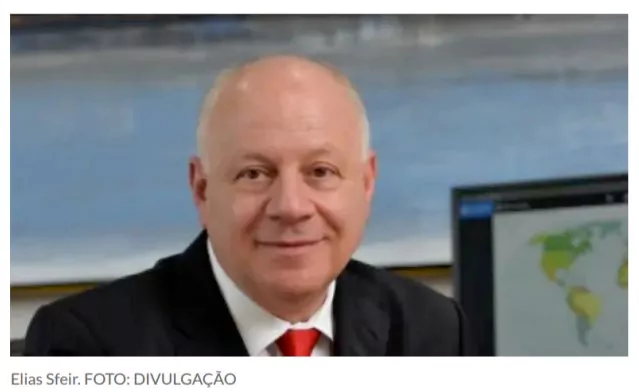
President of ANBC - National Association of Credit Bureaus. Representative of Latin America in the World Bank Credit Committee. He also represents Brazil and Latin America in credit organisations accross the world, such as ACCIS, BIIA and ALACRED.