Five years of Open Finance
O Brasil foi um dos países pioneiros na implementação do Open Finance, seguindo a experiência do Reino Unido. O modelo brasileiro surgiu como o nome de Open Banking, mas foi rebatizado com a perspectiva de agregar diferentes serviços financeiros. Em…
Artificial Intelligence in Credit: from promise to practice
A Inteligência Artificial (IA) é uma realidade concreta no setor de crédito há mais de 20 anos, com tecnologia de machine learning, por exemplo. Atualmente, com a ampliação de uso da IA Generativa, o setor está incorporando cada vez mais…

Regional data: where is credit growing the most?
Os dados nacionais mostram um ciclo duradouro de crescimento do crédito para as famílias no Brasil. As projeções para 2025 indicam um crescimento de 9,3% no saldo de crédito a pessoas físicas, de acordo com o Relatório de Política Monetária….

Income and consumer confidence
Over the last ten years, the Brazilian economy has suffered two major shocks: one internal, between 2014 and 2016, and the other external, with the onset of the pandemic in 2020. These shocks have affected consumer confidence and income, two variables...

Fintechs Transform Credit
Fintechs Transform Credit and Expand E-Commerce in Latin America Latin America is undergoing a profound transformation in the financial sector. Fintechs, which combine technology and financial services, are consolidating their position as protagonists of this change. In Brazil, the...

Socio-economic impacts of microcredit
Small businesses and individual micro-entrepreneurs (MEI) make up the vast majority of companies in the country. According to the Ministry of Entrepreneurship, Microenterprise and Small Business, of the total number of active companies in the four-month period...

Credit for Industry
Credit for Industry: The Foundation of Sustainable Neo-industrialization Brazilian industry is going through a very important moment. Amid the challenges of global competitiveness, energy transition, climate change and digital transformation, credit has emerged as one of the main instruments for...

An overview of cooperative credit in Brazil and worldwide
In June 2025, the Central Bank published the Panorama of the National Cooperative Credit System (SNCC), with data referring to 2024. The aim of this article is to present the evolution of credit in this segment and the outlook for the...

Default, recidivism and credit recovery
Disqualification is an important signaling mechanism in the credit market because it reduces credit risk and the risk of over-indebtedness. In some cases, a negative credit rating can be the result of a one-off problem, due to an unforeseen...

Instant payment methods
Instant means of payment: a vector for financial inclusion in Latin America For the younger generation, it will be hard to imagine how money was transferred before PIX. Launched in November 2020, in the midst of a pandemic, PIX has already become popular...
Credit in times of artificial intelligence
In 2022, the launch of Chat GPT, created by the company Open AI, popularized the term “artificial intelligence”. This is an old concept, whose applications have been studied since the mid-twentieth century. The type of artificial intelligence that has become...

Credit in times of artificial intelligence
In 2022, the launch of GPT Chat, created by the company Open AI, popularized the term “artificial intelligence”. This is an old concept whose applications have been studied since the middle of the 20th century. The type of artificial intelligence popularized in recent...

Agro Credit
Agro Credit: Boosting Productivity and Ensuring Environmental Sustainability In recent years, we have witnessed extreme weather events in Brazil and around the world. The climate crisis is already a reality and demands efforts from the public and private sectors....

The Positive Side of Name Deactivation
The Positive Side of Name Negation: A Necessary Approach to Credit and Society Name negation is the registration of default, i.e. non-payment of a debt. It is done at the request of the creditor...

Turning Receivables into Liquidity: The Future of Credit in Brazil
In April, I had the opportunity to take part in the seminar “The receivables market - a business or credit opportunity for your business”, promoted by ANFAC. The event was a good time to reflect on the future of credit...

The global scenario and the credit environment: revising forecasts
At the beginning of the year, I presented the main economic forecasts for the year 2025 in order to outline the outlook for credit. It was clear that it was important to keep a close eye on the external scenario and on the unfolding of the tariff policy promised by the US government...

Central Bank Digital Currencies: The Future of the Financial System
Central bank digital currencies (CBDCs) represent a significant innovation in the financial world. In recent years, many countries, including Brazil, have taken important steps to explore and implement these digital currencies. But what are CBDCs and how...

Credit for small businesses at the G20: challenges and proposals
We recently took stock of the G20 discussions on the financial inclusion of individuals. We highlighted the progress made in bankarization and the challenges that still lie ahead. Under the presidency of Brazil, the G20 Finance Track also...

Informality, development and the financial system
Labor market data recently released by the IBGE show that the unemployment rate fell to 6.2% in the 4th quarter of 2024, reaching the lowest value in the historical series, which began in 2012. Drawing a parallel with the good...
Credit and Legislative Engagement: A New Chapter for Credit in Brazil
Credit is an essential pillar for economic and social development in Brazil and around the world. Promoting debates that involve society and the legislature is one of the ways to guarantee the sustainability of the sector and access to...

Understanding Abusive Litigation and its Effects on the Brazilian Credit Market
The issue of abusive litigation has attracted the attention of judicial bodies and civil society. But what does this term mean? It refers to the improper use of the right to go to court, through the multiplication of lawsuits with...
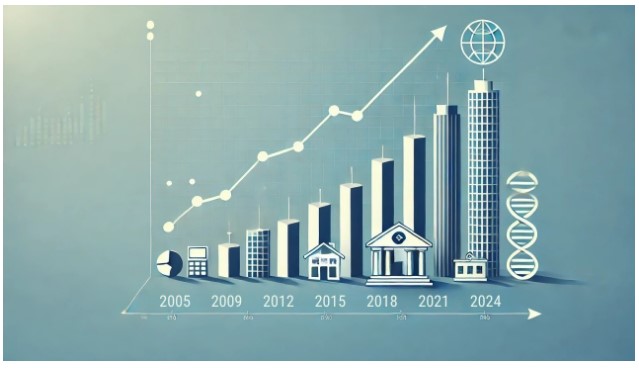
20 years of credit-GDP ratio in Brazil
The credit-to-GDP ratio in Brazil ended 2024 at 54.4%, reflecting the growing importance of credit in the economy. But is this percentage enough? To understand, we need to look at the last 20 years and the contribution of credit bureaus to this progress....

Quality financial inclusion: a warning to the G20
The number of people with access to financial services is growing all the time. This is happening in Brazil and around the world. Advances in information technology and social distancing from the pandemic have contributed to this growth. In the case of...
ANBC & BIIA
I am pleased to announce that the Associação Nacional dos Bureaus de Crédito (ANBC) is now a member of the Business Information Industry Association (BIIA). This partnership strengthens our commitment to innovation, transparency, and the development of best practices in...