Follow on Google News
ANBC debates sustainable credit and the Positive Registry at the VIII Latin American Congress of Micro and Small Enterprises in Curitiba
Responsible for 80% of the jobs generated in the country in 2023, small and medium-sized companies still lack Financial Education and Attitude
The president of the National Association of Credit Bureaus (ANBC), Elias Sfeir, took part in the VIII Latin American Congress of Micro and Small Businesses, held on November 29 in Curitiba. Sfeir was a speaker on the panel “Access to credit is not a barrier to the development of small businesses”, where he discussed how the Positive Registry has contributed to financial inclusion and the strengthening of micro and small businesses (MSEs) in Brazil.
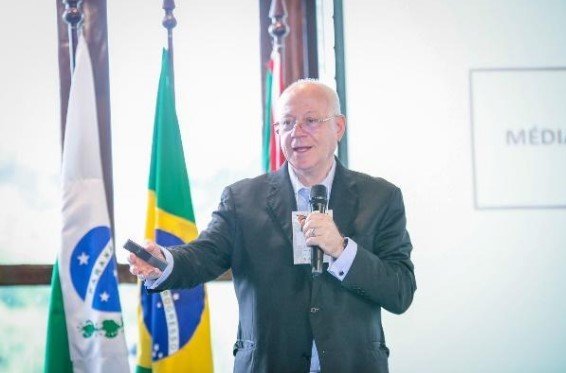
He pointed out that, in five years, the program has reached 171 million registrations, 151 million of which have come from financial institutions. “The Positive Registry has been consolidated as a consumer right and has transformed the credit relationship in Brazil. Today, 78% of the population has already registered an increase in their credit rating, providing greater visibility to 21.3 million individuals and companies who previously faced barriers to accessing credit,” said the executive, highlighting the program's impact on reducing defaults and promoting credit.
Sfeir also pointed out the challenges of the Cadastro Positivo, especially in the Individual Microentrepreneurs (MEIs) segment, whose penetration is only 16%, due to the difficulty in distinguishing between individuals and companies. He also highlighted the need to expand the benefits to regions with lower penetration of the Cadastro Positivo program, such as the North and Northeast.
“Our aim is to ensure that the benefits of the Positive Registry reach all regions equally. It is essential to provide greater visibility for credit in underserved areas and to foster the growth of these local economies,” he added.
When comparing Brazil with other economies, Sfeir emphasized the challenge of the credit-to-GDP ratio, which in the country is between 52% and 54%, while in the US it is as high as 200%. “This disparity reflects the lack of advanced instruments and the necessary visibility for credit to micro and small businesses, which should be seen as solutions, not problems, for the country's development,” he concluded. This international vision is one of the pillars of ANBC, which is a member of the Latin American Association of Credit Bureaus - ALACRED.