Follow on Google News
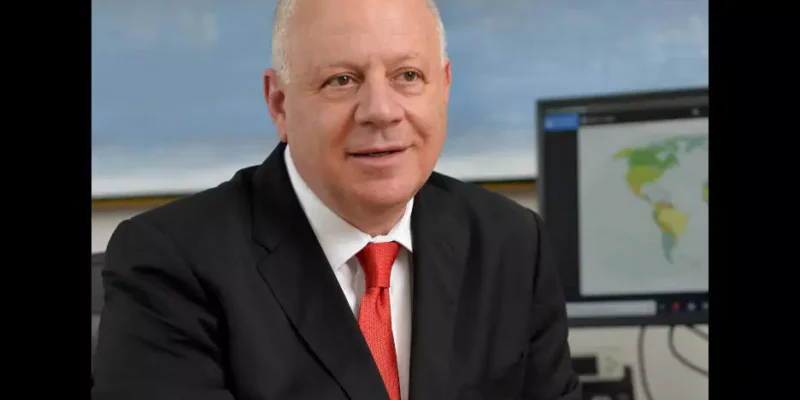
Source: https://ibre.fgv.br/ | Posted by Economic climate | Elias Sfeir, president of the National Association of Credit Bureaus (ANBC) | By Solange Monteiro, from Rio de Janeiro
Identified as one of the major advances on the microeconomic agenda in recent years - along with measures such as the introduction of the electronic duplicate - the Positive Registry (CP) is moving forward with the inclusion of databases that make it possible to assess the payment capacity of people who currently don't have a credit rating, or to improve the assessment of those who already do. “Before, we only had negative information, a snapshot. The positive record is a film in time, which relativizes this default information according to the behavior of individuals and companies in relation to credit. This promotes a more flexible and fair evaluation,” says Elias Sfeir, president of the National Association of Bureaus de Crédito (ANBC).
The law of Positive data is from 2011, but it wasn't until 2019, with the change in legislation - which, among other things, allowed the automatic inclusion of people who have loans, installment purchases or consumer accounts - that efforts to strengthen the Register were stepped up. The first sources came from financial institutions - today 145 share their data with the CP. Then came the telecommunications companies' databases, seven in all, which brought together millions more records of individuals and companies. Sfeir says that, with the arrival of telecoms alone, 12.6 million individuals and companies that didn't have a credit rating were included in the system, which today includes 126 million individual records among the economically active population.
The effort is now focused on attracting energy and sanitation utilities and companies to the Register. In the energy sector, the first to join was EDP, The company, which operates as a distributor in São Paulo and Espírito Santo, has 3.5 million customers. “In this operator alone, we identified that 23% of the base were not seen by the financial system,” says Sfeir. The executive says that bureaus such as the government, the Central Bank and regulatory agencies are united in their efforts to give pace to this incorporation. “It's not an easy move, as it depends, among other factors, on the technological maturity of each company's operation. But we are confident that we will be able to gain ground,” he says.
The sharing of new bases between consumer accounts will be key, says Sfeir, to increasing the inclusion in the Cadastro of people with no or low relations with financial institutions and access to financing. Especially in the North and Northeast regions, where the presence of the Positive Registry is still low. “That's what we've seen from the impact of the influx of post-paid cell phone accounts, which is greater in these regions,” he says. Today, the average CP coverage in Brazil is 75%. But while in São Paulo it has already reached 93%, it is 58% in Maranhão, for example. The same challenge is observed among individual micro-entrepreneurs (MEIS), where CP coverage only reaches 13%. “These are businesses that are intertwined with the entrepreneur's life, so expanding the presence among PF is a way of reaching MEIs,” he says.
The president of ANBC says that since 2019, the expansion of the CP has made it possible for 22.1 million people who were invisible to the financial system, or didn't have a score high enough to take out a loan (above 500 points), to qualify for access to credit. He recognizes that this progress towards consolidating the register came at a positive time for the credit market, in a scenario of low interest rates, feeding a virtuous circle for the sector. “But if today we can't change the basic interest rate (Selic), we can collaborate to improve the credit market. spread” he concludes, citing data from the World Bank which indicate that default accounts for up to 35% of the spread the difference between the interest that financial institutions pay on money invested and the interest charged when taking out a loan.