Follow on Google News
Source: SEE | By Márcio Juliboni, Felipe Erlich 17 Aug 2024, 08h00
A system that gathers the financial history of people and companies reduces credit costs and has included more than 20 million Brazilians in the market
Improving the business environment through sectoral micro-reforms is just as important for stimulating economic growth as solving Brazil's major problems, such as the growing public debt. One example is the Positive Registry, which brings together the financial history of 159 million people and 8 million companies.
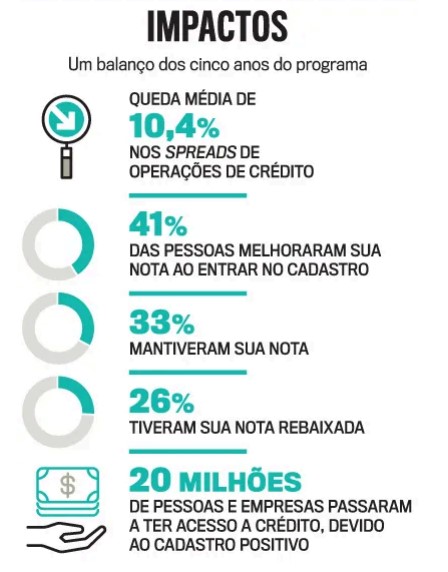
Although its creation dates back to 2011, the credit market considers that the registry took off after 2019, when it was reformulated. Since then, the initiative has contributed to a 10.4% reduction in the banking spread, which represents the difference between banks' costs to lend money and the interest paid by the borrower. “We've shown that by reducing information asymmetry, we can make the system move,” said Roberto Campos Neto, president of the Central Bank, at an event celebrating the fifth anniversary of the new version of the register.
Reducing this asymmetry is nothing more than allowing financial agents to have access to the same information about potential clients' pockets. The fall in the spread is a welcome effect, but not the only one.
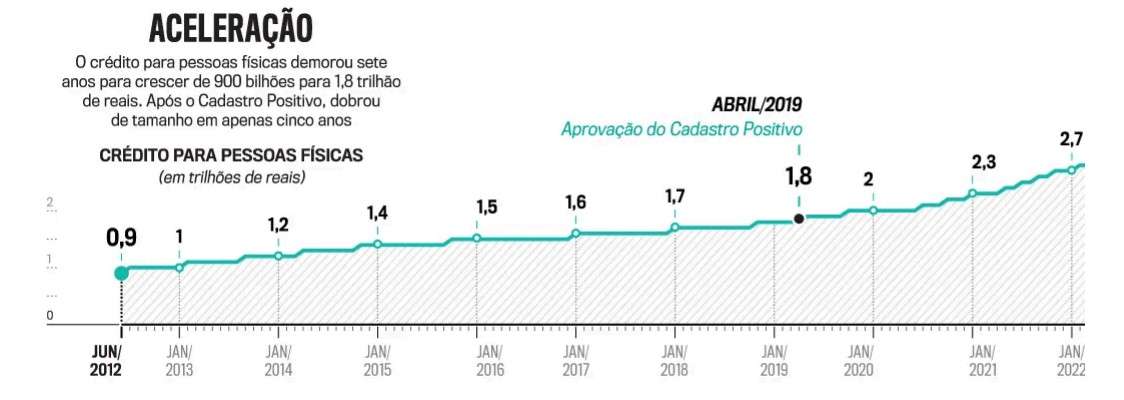
Until 2019, joining the register was voluntary and individuals had to formally request their inclusion. At the time, shopkeepers and financial institutions were mainly responsible for receiving and processing these requests. The population's lack of confidence in exposing their financial lives and companies' difficulties in implementing the project resulted in the low participation that marked the program's first phase: it reached 2019 with only 8 million Brazilians participating. Complementary law number 166, sanctioned by then president Jair Bolsonaro in April of that year, gave Cadastro Positivo a new impetus.
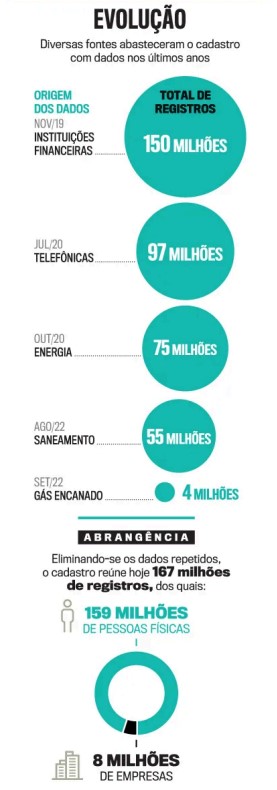
The main change was to make it compulsory to share information. In return, individuals can request to be excluded from the system. The financial sector was the first to contribute, providing data on 150 million names. The registry recruited other sectors, such as energy and sanitation utilities, to obtain the payment history of people who had no relationship with banks. The greatest visibility included 22 million citizens in the credit market. “Collaboration between sectors has helped everyone,” says Elias Sfeir, president of ANBC, the association that brings together credit bureaus.
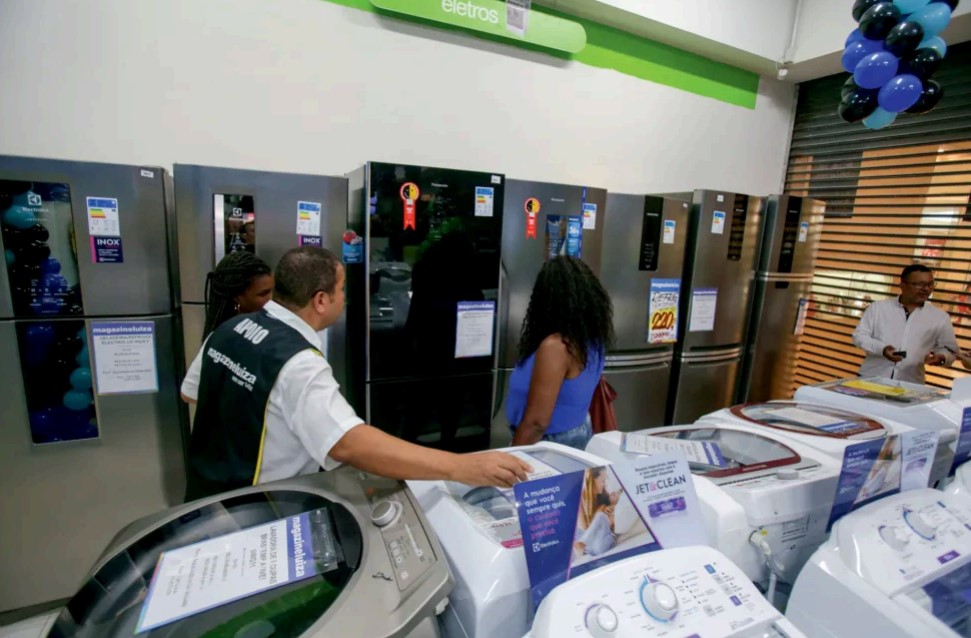
Companies are already feeling the expansion of the market. “We've increased the percentage of customers financed,” says Vital Leite, financial services director at Casas Bahia. With a credit portfolio of 88 billion reais, Banco BV also experienced an acceleration in business after the changes to the Positive Registry five years ago. “About 15% of loans today go to people who wouldn't be approved before 2019,” says Roberto Jábali, BV's credit and collections director. Companies aren't just getting to know more potential customers - they're getting to know them better.
This leads to the offer of more personalized products and services, which reward good payers with special conditions, but without closing the doors to those with a negative credit score. In 2019, BV customers with the worst credit profile paid, on average, interest rates 10% higher than those with the highest scores. “This difference between rates has already risen to 17%,” says Jábali. Banco Pan is experiencing a similar situation. Caio Crepaldi, its credit director, explains that the list of good payers has made borrowing money more objective. “The register helps define the conditions for the credit to be granted,” he says. Of course, the interest rate paid by customers doesn't just depend on their profile. The bill is affected by variables such as the basic Selic rate, the macroeconomic scenario and taxes on the financial sector. That's why, five years into the new register, the average interest paid by individuals is still above 100% per year, but the signs are encouraging, given the fall in the spread reported by Campos Neto. “It's a significant drop and shows that the cost of credit is lower,” says Luiz Rabi, an economist at Serasa Experian.
At the same time, the program has prevented the covid-19 pandemic from leaving an even deeper mark on the economy, which today suffers from 70 million defaulters. “If it weren't for the Positive Registry, defaults would be very high. bigger,” says Rabi. In the past, having a bad name closed doors. Today, more and more experts say that the remedy for those facing financial problems is to have more, not less, access to the market - and the new register is a central part of this. “It's even nonsense to deny credit to people who have a bad credit rating, because that's when when it matters most,” says Tadeu Silva, president of Acrefi, the association that represents finance companies.
Banks are also more willing to open their coffers. In recent weeks, the country's largest institutions - Itaú, Bradesco, Banco do Brasil and Santander - have stated that, following the good results obtained in the second quarter of 2024, they are inclined to grant more credit. As the micro-reforms implemented by the Central Bank progress, they will acquire more synergy.

The next leap will be the convergence between the Cadastro Positivo and the Open Finance system - which provides even more transparency into consumers' financial lives. On the one hand, this combination will make it possible to develop more personalized financial products that offer better rewards to good payers, while still serving those at the bottom of the pyramid. On the other hand, customers who are more aware of their good credit rating will have greater bargaining power, in a virtuous circle in which everyone wins. Brazilians' pockets will thank you.