
Source: https://www.bloomberglinea.com.br/ - By Sérgio Ripardo
TransUnion changes command in Brazil with focus on expansion and hires ex-Neon and BTG
Former CRO of Neon, Fernando Musolino will lead the operation of the North American credit analysis company in place of Juarez Zortea, who has decided to retire after more than twelve years in the operation.
Bloomberg Línea - TransUnion (TRU), the North American credit analysis company, has just changed the command of its bureau in Brazil, a market with the datatechs Serasa Experian, SPC Brasil, Equifax and Quod.
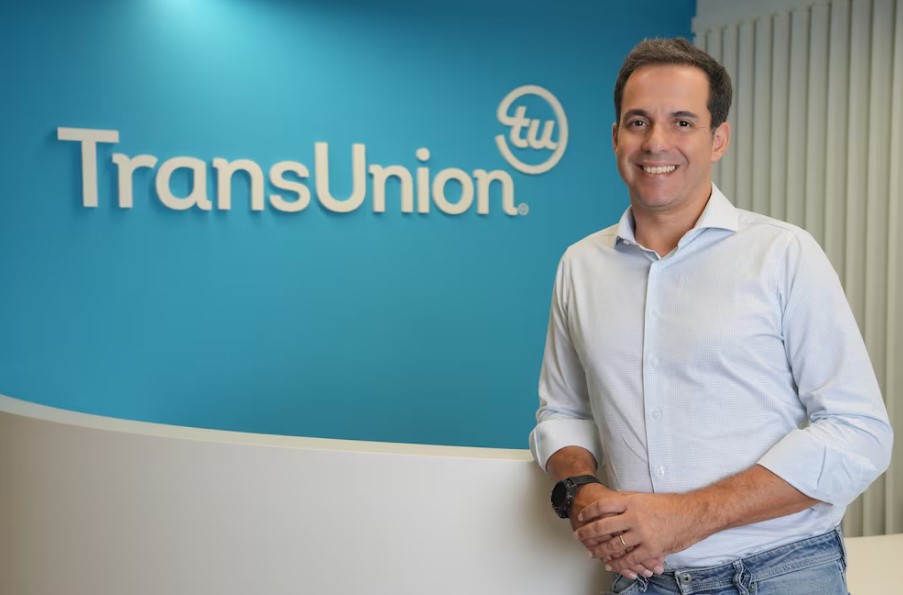
Former CRO (Chief Risk Officer) and Head of Credit Strategy & Analytics at Neon, Fernando Musolino will be officially announced this Monday (14) as the new regional president of TransUnion in the country, according to information provided to Bloomberg Línea.
Before Neon (between August 2023 and December 2024), the executive worked at BTG Pactual (BPAC11), between April 2021 and July 2023, as executive director in the credit area.
He was also CFO of RCB Investimentos, Bradesco's credit recovery company (BBDC4), between June 2019 and March 2021, according to his LinkedIn profile.
“Musolino will lead TransUnion's business in Brazil, defining the strategic vision for the country, with a focus on driving the company's continued growth and building customer relationships,” the company said.
The Brazilian market for credit protection agencies is currently led by Serasa, whose controlling stake was acquired by the Irish group Experian in 2007. In 2023, the US company Equifax bought Boa Vista Serviços, Brazil's second largest credit bureau.
In the US, TransUnion, Experian and Equifax are considered the three main players among the datatechs analyzing credit data, a valuable tool for financial institutions and other companies in making decisions about granting loans and financing and risk management.
Chicago-based TransUnion began operating in Brazil in 2012 after acquiring Crivo Sistemas em Informática, a credit analysis company.
In 2022, it became a member of ANBC (National Association of Credit Bureaus) after the Central Bank authorized it as one of the managers of the Cadastro Positivo, a database of the payment history of individuals and companies. Zortea is a member of the ANBC board.
“Musolino is an expert in the entire credit cycle and we are excited to welcome his leadership to our operations in Brazil,” said Todd Skinner, international president of TransUnion, in the note.
The company is present in more than 30 countries and has more than 13,000 employees globally. Its main clients are financial institutions, insurance companies, retail, telecom, fintechs, e-commerce, industries and SMEs (small and medium-sized enterprises).
“I am delighted to have the opportunity to lead such talented teams. I look forward to building on the exceptional foundation established by Juarez to continue strengthening trust between businesses and consumers,” Musolino said in the statement.
The executive has a master's degree in Business Administration from the Dom Cabral Foundation, a degree and certificate in Business Administration from the Brazilian Institute of Capital Markets and a bachelor's degree in Industrial Engineering from the Industrial Engineering College.
Credit scenarios
Data provided by ANBC to Bloomberg Línea shows that Brazil began 2025 with an increase in defaults in a scenario of high interest rates - the Selic is at 14.25% per year: 45.9% of individuals were in default in January, a total of 74.6 million consumers.
The average amount of debt grew by 6.2%, to an average of R$ 5,497 per person. According to the organization, 86% of those with a negative credit score are repeat offenders (they had restrictions in the previous 12 months).
In the sphere of legal entities (PJs), 6.7 million micro and small companies were denied credit in January, with 69% of those denied credit having recent restrictions. The Positive Registry, set up five years ago, has 117 million unique records.
The tool gathers the payment history of consumers and companies, taking into account data from financial institutions, telecommunications and energy.
Recently, the sanitation and gas sectors began implementation projects to finance data for the Cadastro Positivo. The system offers greater visibility for good payers and improves risk analysis with each person's history.