
Follow on Google News
Credit in Brazil grows to 8.6% in 2024 if obstacles are overcome
By: LinkedIn News
In the newsletter Boletim Finanças, the LinkedIn News brings you the latest developments in the financial and capital markets in Brazil and around the world, investment strategies, financial planning and tips on how to expand the reach of your content. To follow along, just click on the “subscribe” button at the top right. Get involved with suggestions, comments and questions.

Credit drives the economy. And it is the financial system and the capital market, where finance professionals work, that supply the country with this instrument. In commerce, for example, out of every R$ 100 reais that people receive in loans, R$ 80 reais becomes consumption that fills shopkeepers' tills, according to research by CNC - National Confederation of Trade in Goods, Services and Tourism. The more credit, the greater the consumption - an item that represents 63% Gross Domestic Product of the country.
The good news given by economists from some of the main entities operating in this market is that credit will grow more in 2024 than the pace of expansion seen in 2023. The expectation is that the rate of increase will rise from the estimated 7% in 2023 to 8.6% of the total portfolio, up from 8.6% in 2024. R$ 5.6 trillion - R$ 3.4 trillion for individuals and R$ 2.2 trillion for companies, according to the Central Bank.
But experts highlight two points of caution. The first is that this growth will still be lower than the average of 15% seen in 2021 and 2022. The second is that there are obstacles on the radar: the still high level of household defaults, and possible changes to rules, such as rate caps, which could discourage the supply of loans.
Banks will lend more
Banks project credit growth in Brazil to reach 8.3%, according to research of Febraban above the 7% rate estimated for 2023. The entity's economic affairs manager, Fernando Castelli, He pointed out that this advance will be greater than that seen in 2023, but still lower than the 15% rates seen in 2021 and 2022.
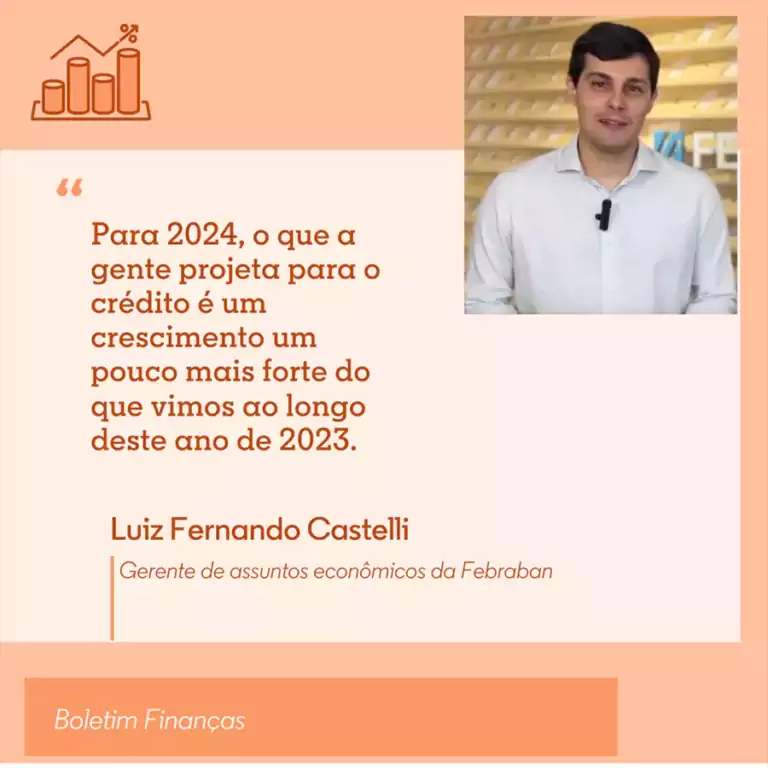
In an interview with LinkedIn News, Castelli listed the factors that will allow this scenario to improve in 2024 after the adjustments in 2023.
- Normalization of the business segment, after the crisis caused by the judicial recovery of American and other large companies
- Reduction in the Selic basic interest rate
- Falling unemployment and increased income
- Reducing defaults
Fintechs looking for a reaction
This is also the scenario outlined by credit fintechs and digital banks, which hope to resume the pace of growth in concessions.
The segment closed 2022 with a credit supply of R$ 14 billion, when the pace of growth fell from 95% in 2021 to 9%.
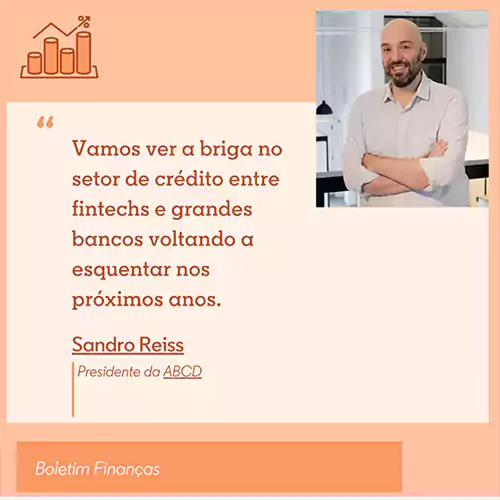
According to the president of ABCD (Brazilian Digital Credit Association), Sandro Reiss, In 2024, credit will grow more due to advances on both sides of the market.
- On demand, by improving employment and income indicators
- On offer, the impact of regulatory changes - such as the Framework of Guarantees, the means of payment and the open finance - which have increased legal certainty for the provision of credit
In this interview Speaking to LinkedIn Notícias, Reiss said that the market downturn has led the big banks to focus on the safest audiences. This will leave more room for fintechs that identify opportunities to offer products on cheaper, easier-to-use and fairer terms for customers.
Obstacles on the radar
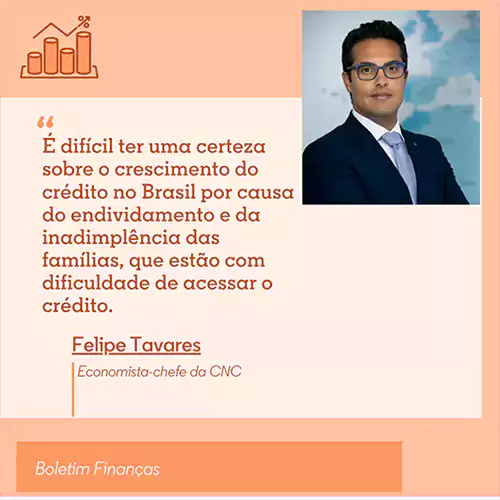
But while some regulatory changes should help credit growth in 2024, other rule changes, still under discussion, could hinder this trend, he says Felipe Tavares, chief economist at CNC - National Confederation of Trade in Goods, Services and Tourism.
He warns that percentage of families with debts due is still high, at 76.9%, and that the volume of consumers saying they won't be able to pay off overdue debts, at 13%, is up from 10.6% a year ago.
In this interview, Tavares said that proposals that limit modalities, as in the interest-free installments, on the card e in INSS payroll loans, This can get in the way of credit.
Financial education
Professionals argue that rules that limit competition could affect the expansion of credit at a time when financial education is maturing in the country.
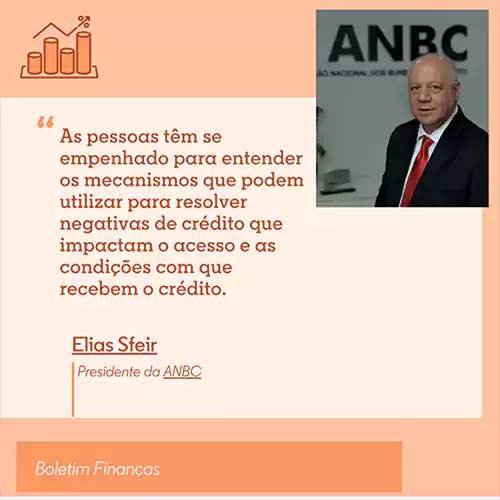
For the president of ANBC - National Association of Credit Bureaus, Elias Sfeir, As a result, Brazilians are paying more attention to tools such as credit scores in order to choose the best conditions for taking out loans and financing.
In this interview, He said that this factor could support an increase of up to 8.6% in the credit portfolio for individuals in Brazil next year.

Pillars of credit in 2024: The Economist Luiz Castelli, economic affairs manager at FEBRABAN, listed the factors that will sustain the advance of credit in 2024. According to him, on the demand side, the job market is hot, unemployment has fallen, as has inflation and the interest rate - factors that feed a healthier demand for credit.


Americanas closes agreementSource of part of the credit crisis this year, the Americanas, in judicial reorganization, signed an agreement with creditors who own 35% of the company's debt. The terms include the payment to workers and small entrepreneurs of debts of up to R$ 12,000, as well as a contribution of R$ 24 billion to the company, half of which will be paid by major shareholders Jorge Paulo Lemann, Marcel Telles and Beto Sucupira. The proposal will be voted on at a meeting on December 19th.

Financial healthIn times of still selective credit supply, money worries Brazilians more than health, family and work. According to a survey by fintech Eleven in partnership with the insurance company Icatu, 71% of respondents say they are emotionally affected by financial problems and another 39% admit to having their work negatively impacted by this factor.

Fenalaw: Law is one of the pillars that support the financial and capital markets, ensuring that the sector can make projects viable, always supported by the law and regulatory frameworks. This is why the exchange of experiences between finance professionals and lawyers is part of careers in both sectors. An example of this was the 20th anniversary edition of Fenalaw - Latin America's largest and leading congressional fair for the legal market. The event attracted 2,000 participants, 500 speakers, 140 exhibitors and 7,000 visitors. O LinkedIn was there.