Follow on Google News
It didn't take long for the popularization of smartphones to profoundly transform our routines. This transformation has had a huge impact on our financial lives, leaving behind the days when we had to go to an ATM to print out a statement or go to a service point to check the status of our name. Today, all this is in the palm of our hands and just a few clicks away.
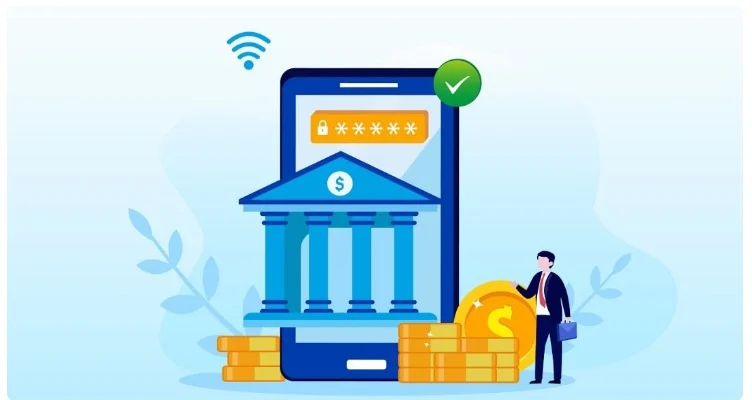
The so-called digital banks emerged from the combination of the development of information technology and regulatory transformation. After all, what characterizes a digital bank? In truth, this term refers more to a strategy of offering services via platforms and APIs (Application Programming Interfaces) than to a legal modality different from traditional banks and their face-to-face channels. According to the Central Bank, There is no specific license for institutions with only a digital presence.
Digital banks are generally considered to be institutions that operate without a physical presence and make digital channels the mainstay of their business and service model. Strictly speaking, not all the brands recognized as digital banks are banking institutions in the strict sense of the term, acting, for example, as payment institutions or credit fintechs.
These models have experienced strong growth in recent years, attracting customers from traditional banks, which in turn have expanded their digital channels. According to a survey by the Central Bank of Brazil, the number of bank branches fell from 19,319 in 2020 to 17,908 in 2022, evidence of the trend towards digitalization.
The regulatory changes that drove this movement date back to the beginning of the last decade, when the Central Bank regulated the operation of payment arrangements and institutions. Since then, regulation has been improved, with the aim of balancing the incentive for competition with risk management.
The financial ecosystem has evolved to a stage where, as we recently discussed, In this way, companies from different sectors can offer financial services to their customer base through the platform infrastructure of banking technology providers and regulatory licenses, a model known as “Banking as a Service”.
In this scenario of multiplying financial services on offer, the question is how to survive in the market. Innovation aimed at improving the user experience is a requirement for survival, offering intuitive use of digital applications and functionalities. Investment in security is another, as is investment in agile support to curb fraud attempts.
In order to go beyond the basics, it is important to understand that consumers are increasingly looking to broaden their knowledge of personal finances in order to improve the management of their financial lives. Institutions that focus on financial education, offering products and services that make sense for consumers and make it easier for them to organize their finances, will have a better chance of building a solid and lasting relationship with their customers. More than offering a credit product or service, the aim is to add value to the financial journey.
The creation of the General Data Protection Act (LGPD), another regulatory change, was fundamental in facilitating a solution to the issue of information asymmetry, which has been a barrier to the development of the credit market. In this respect, we are experiencing a new paradigm, with the sharing of data with the customer's consent.
In this new ecosystem, some strategies are necessary for success:
- Improving offers so that customers have seamless digital experiences. Examples: chatbots, artificial intelligence and blockchain technology.
- Improving the customer experience through personalization and efficiency. Examples: support 24 hours a day, seven days a week, including voice support due to consumers' varying degrees of digital knowledge, personalized product recommendations and agility in the onboarding process.
- Create an agile operating model to adapt to market changes and customer needs. Examples: agile project methodologies and cloud-based solutions.
- Maintain partnerships with fintechs to accelerate the adoption of innovations. Examples: anti-fraud and payment processing solutions.
- Analyze data to gain insights into customer behavior and adjust services in the process of continuous improvement.
- Another key to success is guaranteeing access to the internet and smartphones to ensure that customers are included in this new ecosystem.
The time is ripe for financial innovation and disruption, including encouragement from the regulator. Learning from the best practices of international experience, the Brazilian monetary authority created the Regulatory Sandbox. This is an environment in which companies in the sector have the opportunity to test products and services in a less rigorous regulatory environment. The credit bureau sector closely follows the issue of financial innovation because it believes it is a powerful instrument for financial inclusion, one of the pillars of its mission.
Thanks for reading! Access other content at ANBC website.

By: Elias Sfeir President of ANBC & Member of the Climate Council of the City of São Paulo & Certified Advisor