Follow on Google News
Credit bureaus are optimistic about the Central Bank's digital currency
Source: https://www.telesintese.com.br/ |
For ANBC, the challenge will be cybersecurity, but the prospect is that regulated digital currency will heat up the economy
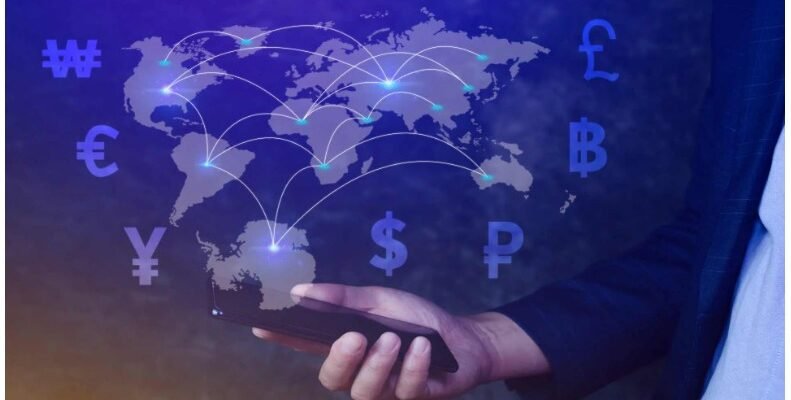
Credit bureaus operating in Brazil are optimistic about the prospect of a digital 100% currency emerging in Brazil. The go-ahead for the creation of this currency was given by the Central Bank on August 21, when a working group was created to study the issue and draw up the guidelines that will guide the operation of the Brazilian payment system based on electronic currency.
If the project progresses at the speed promised by the Central Bank and the Ministry of Economy, in just over a year the country could already have its digital currency in use, albeit not very widely.
For the bureaus, even if full digitalization takes time, it will result in economic growth. Firstly, because it will save the state money. “It's something that will save R$ 90 billion a year that the Central Bank has to spend on managing means of payment and other transactions,” said Elias Sfeir, president of the National Association of Credit Bureaus. This afternoon, he took part in a live broadcast held here by Tele.Síntese.
According to him, however, it is important that the Central Bank adopts practices equivalent to those seen in other countries that are also digitizing their currencies. “If it's really born with global characteristics, it will be much safer, it will bring capillarity, there will be much greater control over means of payment, so visibility over transactions will be much greater,” he said.
For the executive, the great quality of the digital currency is that it is regulated by a central bank, unlike Bitcoin. “It will also increase the currency's turnover speed. It tends to accelerate the economy, generating well-being and jobs,” he summarized.
OPEN MARKET
The executive also commented on the adoption of PIX in the country. I remember that Brazil is still a nascent market in digital transactions, and digital currency and the PIX, Among other measures, they contribute to accelerating the financial inclusion of people who are not yet banked.
“Comparing the numbers of electronic payments in the world in 2019, per inhabitant per year, we see that in Singapore there were 831, in the US 495, and in Brazil only 166. So the potential for growth in electronic payments without currency is great. In Brazil in 2019, 60% of banking transactions were already electronic. With the pandemic, this movement has accelerated. Changes that were expected in 5 years were made in 5 months,” he summarized.
POSITIVE REGISTRATION
Sfeir also said that the positive registry is already having an effect on credit. Preliminary analyses indicate that the volume of credit in Brazil has grown. He cited the case of a retail finance company which, after accessing data from the positive register, increased its credit distribution by 15%.
A pandemic, Although it has put many people in financial difficulty, it has seen a smaller than expected increase in the number of people in debt compared to 2019. According to him, this is because bureaus and market agents have agreed to allow more time for debt negotiations. Traditionally, companies send negative information within 10 days. With the pandemic, the time has gone up to 45 days.
“We saw that it really worked and the negotiations, with more time, were effective,” he said. According to him, Brazil currently has 66 million people with negativadas (“with a dirty name”) in the bureaus, and another 6 million companies also in this situation of default. In the same period in 2019, there were around 63 million. In real terms, this means debts totaling R$ 250 billion among individuals and R$ 110 billion among companies.
According to the executive, the bureaus currently have 100 million records in the positive register. With the operators joining the system from October, this should rise to 150 million records. And in six months' time, new data will be received, since ANBC has just signed an agreement with the energy distributors and is also negotiating with sanitation, large retail and gas companies.